
Start a San Bernardino Residents Directory Search
A resident search works best when the first record answers the question already in hand. A street address belongs with the San Bernardino County Assessor-Recorder-County Clerk property tools. A recorded deed is found by grantor or grantee, not by street address. A court question belongs in the Superior Court Access Portal. A family-history question may belong at the California Room rather than in a current roll. These are separate trails, even though the county offices sit close together.
Begin with two anchors: the exact spelling of the name and the date or place tied to it. If the starting clue is an address, keep the full street number, directional, suffix, unit, ZIP code, and any parcel number. If it is a person, keep middle initials, compound surname parts, former names, and a sensible year band. Owners, assessed names, recorded parties, voters, licensees, and occupants are different categories. One match is a lead, not a conclusion.
- Use ARC Property Information to turn a situs address into an APN and assessment name.
- Use the county's My Elections Gateway for your own registration details, or follow the qualified voter-file process for a permitted purpose.
- Search the ARC recorder index by grantor, grantee, document number, date, or title.
- Use the court, vital, business, or professional portal that fits the person's role, then record what the result actually confirms.
- For an earlier household, move to the California Room, newspapers, census schedules, and the county archives instead of assuming the current web roll reaches back.
When an online result is missing, the fallback is not to guess. Ask the custodian for an existing record, visit the counter when public inspection is offered, order the copy, or use the library and archive route documented for that record set.
San Bernardino Offices Behind Resident Records
San Bernardino is the county seat, so the main county record offices are in the city. The convenience is real, but the records remain separate. ARC handles assessment, recorded instruments, county vital copies, marriages, fictitious business names, and notary filings. The Registrar of Voters controls voter-record access. The City Clerk holds municipal records. The Superior Court keeps case files and probate matters. A San Bernardino residents directory assembled from these sources must keep those roles distinct.
The San Bernardino City Clerk is the starting point for council minutes, ordinances, contracts, campaign filings, official books, and focused city-record requests. It is not a household roll. A permit, code file, or public meeting record may connect a person or business to an address, but it can show an applicant, owner, contractor, official, or speaker rather than an occupant.
ARC Recorder-Clerk
222 W. Hospitality Lane
San Bernardino, CA 92415-0022
909-387-8306
ARC Assessor Services
222 W. Hospitality Lane
San Bernardino, CA 92415-0022
909-387-8307
Registrar of Voters
777 E. Rialto Avenue
San Bernardino, CA 92415-0770
909-387-8300
The ARC building is the place to plan a recorder or vital-copy visit, while the court district where a case was filed controls a court-file request. The library and archives supply a different kind of evidence: printed directories, old newspapers, probate material, Great Registers, lot books, and maps.
Note: County-seat convenience does not combine custody; ARC, court, city, library, and voter records remain separate.
Anchor San Bernardino Directory to Parcel
An address is a useful starting clue, but it is not the recorder's search key. ARC says the recorder does not identify ownership by street address. Start in Parcel Access with the physical situs address, select the parcel, and note the APN, assessment owner, legal description, and the difference between the situs and mailing addresses. The APN is the bridge to the map, tax work, and later recorded-document research.
The ARC property-information page explains the public map and historic assessment-roll coverage from 1978 forward. A parcel card may show the APN, situs, assessment name, values, property characteristics, geometry, and related links. It does not promise every person at the address. An assessment name is not a judicial title ruling. A mailing address can belong to an absentee owner, a business, or a separate residence.
The ARC property-information screenshot below shows the county entry point for Parcel Access and the public assessor map. The page helps establish which county tool should be used before a San Bernardino residents directory search moves to deeds.
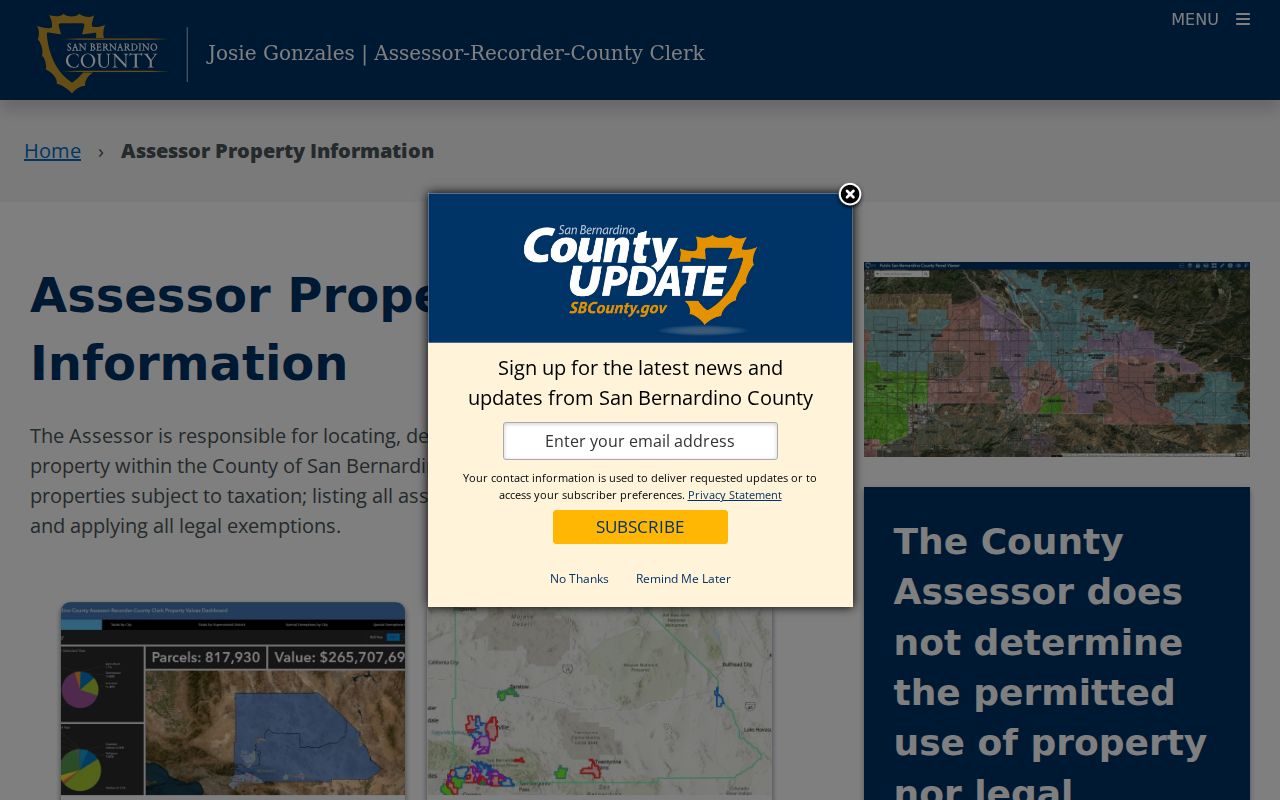
That property source is an address-to-parcel aid, not a complete resident list. Preserve the exact APN and legal description before leaving the map, because those details can resolve a corner lot, condominium, vacant parcel, or mailing address that does not match the physical location.
- Parcel
- A mapped taxable unit identified by an APN, not a list of every household member.
- Roll
- An assessment or registration record maintained for a defined administrative purpose.
- Situs address
- The physical location of the parcel, which can differ from the owner's mailing address.
- Criss-cross directory
- A reverse directory that reads addresses or streets numerically and may list a subscriber or householder for a year.
Note: A mailing address can suggest an ownership location, but it does not prove who occupies the parcel.
San Bernardino Recorder Name Trails
Once the parcel supplies a current assessment name and legal description, move to the ARC recorder index. The index is organized around document number, document date, document title, grantors, and grantees. A grantor transfers an interest; a grantee receives one. Search the relevant party name, keep the role, and match the legal description before treating the document as part of the parcel trail.
The online official-record index is advertised from 1925 forward, while the detailed property-research guidance describes name-chain work from 1958 forward and pre-1958 microfilm. Those are two published access claims, not a reason to fill the gap with an invented cutoff. Ask Recorder-Clerk staff which index or decade film applies to the record in question. Online users see index information, not the full instrument image. Contents can be inspected at the Hall of Records or High Desert Government Center, and copies can be ordered online, by mail, or at the counter.
The ARC official-records page shows the recorder index and the separate copy workflow. The screenshot below is a useful visual reference for the index route. It does not turn a name search into an address search.
Record the document number, date, title, grantor, grantee, legal description, and confidence at each step. Full terms, images, and some protected records require the copy or counter route. The county's published fee schedule and card surcharge should be checked at request time.
| Index field | What it can establish | What it cannot establish online |
|---|---|---|
| Grantor / grantee | Party role in a recorded instrument | That the party lived at the parcel |
| Document number and date | Where the instrument sits in the record | Every fact inside the document |
| Document title | Deed, lien, release, map, or another recorded type | Full legal terms without a copy |
| Image or copy order | Access to the instrument through counter or order channels | Automatic public web image display |
What San Bernardino Voter Records Show
The county's My Elections Gateway is an authenticated self-service tool. It can return a user's registration status, districts, polling place, sample-ballot information, mail or provisional ballot status, election details, and elected officials. It is not an open San Bernardino residents directory. The California VoterStatus route serves the same narrow self-check purpose, and neither tool reveals ballot choices.
Qualified voter-file access is different. Under Elections Code section 2194, the county may provide specified file products for election, scholarly, journalistic, political, or governmental purposes. The application must state the purpose and follow the county's delivery and payment rules. Names, residence or mailing addresses, status, party preference, and registration date may appear in a qualifying product, while signatures, identification numbers, protected addresses, and other confidential fields stay out of ordinary access. Commercial use and internet display are prohibited.
The San Bernardino County Registrar of Voters page is the route into My Elections Gateway and election resources. Its screenshot below should be read as a self-service entry point, not as a public name-and-address lookup.
For historical work, the county archives' Great Registers from 1866-1908 can be richer in some years, with occupation, age, height, description, and naturalization information. That historical source is a genealogy aid, not a current voter roll.
Note: My Elections Gateway is a personal status check, not a public list of San Bernardino voters by street.
Current San Bernardino Resident Directory Sources
There is no single official list of everyone in San Bernardino. The closest current directory sources answer different questions. A parcel search identifies an assessment owner and physical location. A recorder index identifies parties to documents. The voter route is privacy-gated. City staff pages identify people in official roles. Licenses and business filings show a professional or business connection. Each entry belongs in a separate evidence column.
| Source | What it lists | Keeper | Access boundary |
|---|---|---|---|
| Parcel Access | APN, situs, assessment name, map and property fields | San Bernardino County ARC | Public interactive map; not a household roll |
| Recorder index | Grantors, grantees, titles, dates, document numbers | San Bernardino County ARC | Index online; image counter or copy order |
| My Elections Gateway | One voter's status, districts, and ballot logistics | County Registrar of Voters | Authenticated self-lookup |
| City records | Minutes, permits, code files, contracts, official filings | San Bernardino City Clerk or department | CPRA request or city search; exemptions apply |
| Licenses and entities | Public professional or business affiliation | California agencies | Free portals with board-specific limits |
Use the source that matches the question, then corroborate with a second independent fact. A current assessed owner and a historic directory occupant are not the same type of evidence. A business address and a home address are not interchangeable. A missing voter entry may reflect a protected registration, inactive status, or a self-service boundary rather than a move.
San Bernardino Courts and Vital Records
The Superior Court of California, County of San Bernardino, serves civil, criminal, traffic, family, probate, and juvenile matters. CAP can return a case number, title, party roles, case type, filing date, events, hearings, disposition, and document-sale links depending on the case. Free direct case-number access differs from name-search credits and copy charges. Pre-1998 data is limited, older files may be off site, and juvenile, sealed, confidential family, and adoption material has special access rules.
Vital records require a different route. ARC handles county births and deaths and marriages licensed in the county. County Public Health is the local registrar for recent events. CDPH-Vital Records is the statewide custodian. Informational copies of many nonconfidential records may be requested by anyone but carry an identity-use legend. Authorized certified copies require a qualifying relationship and sworn statement; mailed authorized requests are notarized. Confidential marriage records are limited to a party or court order, and adoption files follow sealed-record rules.
For an individual lookup, match the person to an address, case role, spouse, business, or date before ordering a copy. A court filing is not a judgment. A death index is not proof of every family relationship. A certificate confirms the event type shown by the custodian.
The CAP image above comes from the official court access route. Use the filing district and the court's public-file guide when the online case view is not enough. For a recent birth or death, contact County Public Health before treating an absent ARC record as a dead end.
Historical San Bernardino City Directories
The Arda Haenszel California Room at the Feldheym Central Library is the strongest local shelf for an older San Bernardino residents directory search. Its listed holdings include San Bernardino city directories from 1887-1968, criss-cross directories from 1976 to the present, telephone books from 1918 to the present, the San Bernardino Sun on microfilm from 1894 onward, newspapers, obituaries, yearbooks, early maps, photographs, family histories, and cemetery material. The room is at 555 W. 6th Street, and its posted hours and research service should be confirmed before travel.
The library catalog and reference desk are the discovery route. Licensed genealogy and newspaper databases may require a library card or in-library use. The California Room also offers mail research at $20 per hour or part, plus $0.25 per page, according to the research notes. The county Historical Archives is a separate repository for older government records and currently directs researchers to email staff while its building is closed. The Arrowhead catalog is named online but its database is temporarily disabled.
The California Room collection page connects the shelf, newspaper, map, and local-history routes. The library screenshot below shows the public library entry point used to reach those resources.
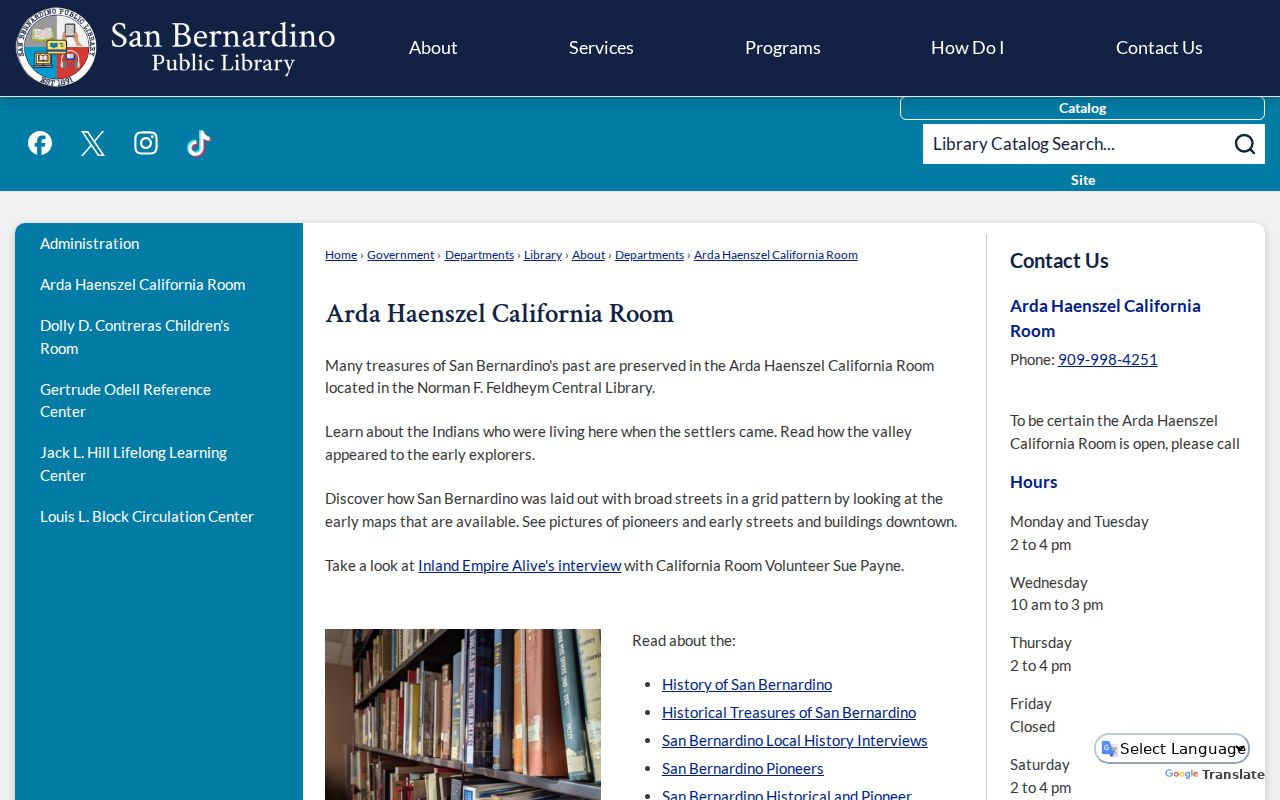
Directory entries are snapshots. A name may disappear because of a move, omission, a name change, or the publisher's canvass. Pair a directory with census, deed, obituary, newspaper, Great Register, or probate evidence before making a family-history claim. The full collection and reading method are kept on the San Bernardino Directory Book page.
Note: A printed directory year can place a listed household at an address without proving present occupancy.
The 1853 San Bernardino Records Hinge
San Bernardino County was created from Los Angeles County on April 26, 1853. That date is a practical routing test. For a birth, land claim, marriage, deed, or court matter before county organization, an empty San Bernardino search does not mean the event left no record. Search Los Angeles County predecessor records, mission or church registers, California State Archives guides, and federal Spanish or Mexican land-claim files.
Municipal records have another break. San Bernardino was incorporated in 1854, disincorporated in 1863, and reincorporated in 1869. A city clerk series cannot be assumed to run without interruption across those years. County, tax, newspaper, directory, church, and family sources may bridge the gap. This local history matters because a modern San Bernardino residents directory search can otherwise mistake a missing city volume for a missing person.
There is no verified local courthouse-fire story explaining a defined loss of San Bernardino books in the research. The safer explanation for a gap is the documented division of custodians and the changing form of the record. The county history route is a useful first stop for the 1853 context.
San Bernardino Business and License Trails
A person may appear in San Bernardino records through a business, trade, or professional license rather than a property roll. California Secretary of State bizfile searches entity names and numbers and can expose an entity's status, jurisdiction, agent, addresses, and filings. County fictitious-business-name statements add a local DBA trail. The City business-registration route can show most businesses that hold or held a registration, but an operational address is not a residence.
California Department of Consumer Affairs searches by board, license type, name, license number, city, or county. The Contractors State License Board has business, license, and personnel modes. The State Bar has name and bar-number lookup. These results can corroborate a name, public contact, occupation, or business affiliation. They cannot convert an office address into a home address or prove present occupancy.
The California license-search page screenshot below shows the state portal used for regulated-profession verification. The separate bizfile search is the better route for an entity trail.
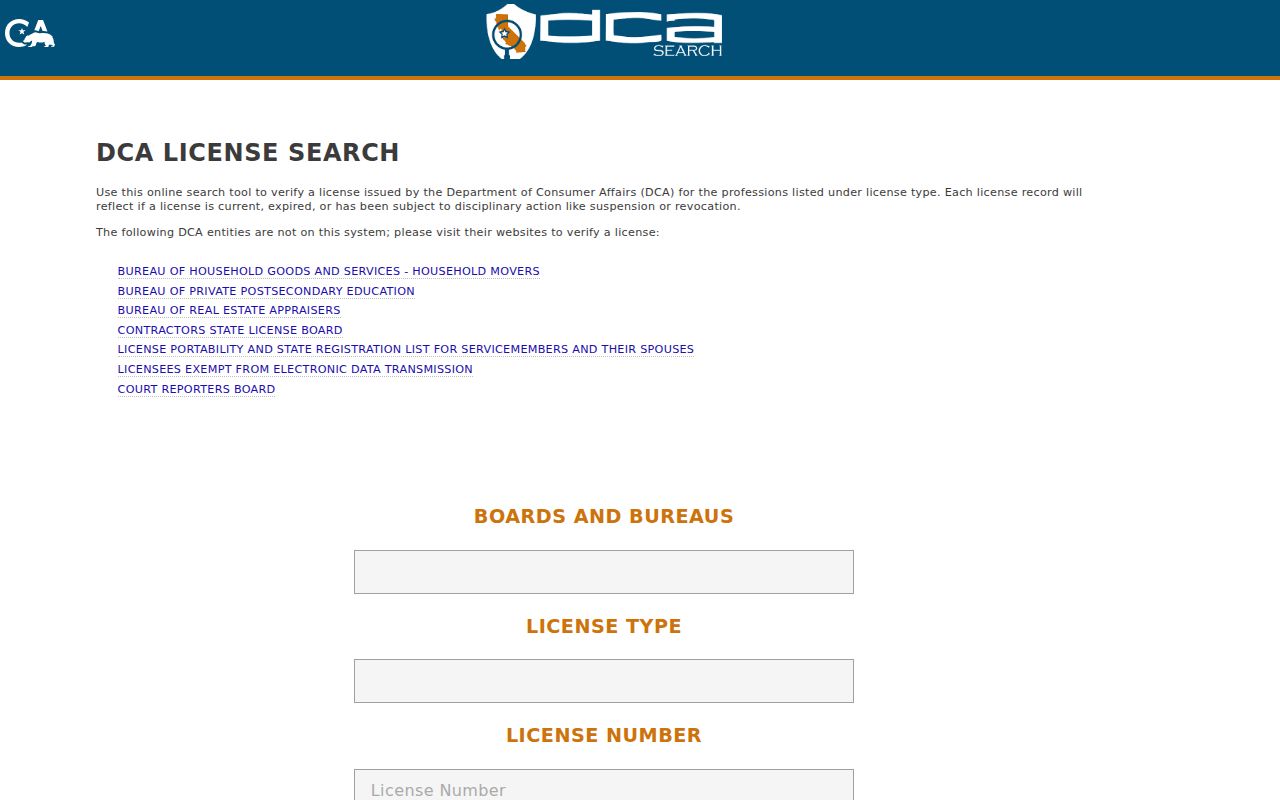
For a business lead, preserve the entity number, filing name, agent role, address type, and filing date. The business-search screenshot below illustrates the separate Secretary of State route and should be read as an affiliation source rather than a resident roll.
License and entity records are strongest when paired with an independent parcel, court, directory, or newspaper fact that fits the same date and person.
When San Bernardino Online Indexes Stop
A web search may stop because the source is index-only, the record predates a published coverage point, the portal is authenticated, or the record is held by a different office. ARC recorder images require a counter inspection or copy order. Older deed work may require decade microfilm. Court files can be ordered from the filing district, with off-site retrieval time. Vital copies can move between County Public Health, ARC, and CDPH depending on the event and date.
For city records, make a focused California Public Records Act request to the San Bernardino City Clerk or the department holding the existing permit, code, contract, or inspection record. The CPRA, Government Code sections 7920.000-7931.000, gives an agency a determination period but does not make it answer a research question or create a new list. Ask for a recognizable record, date range, address, APN, permit number, or case number. Inspection is generally free; copy costs may apply.
Historical fallbacks include the California Room, San Bernardino County Historical Archives, California State Library, State Archives, NARA census schedules, Library of Congress maps, the California Digital Newspaper Collection, and the local historical society. Each route has its own scope. A directory shelf does not replace a deed, and a map does not identify an occupant.
The county records desk image below is a reminder to verify the responsible division before treating an online index as a complete resident source.
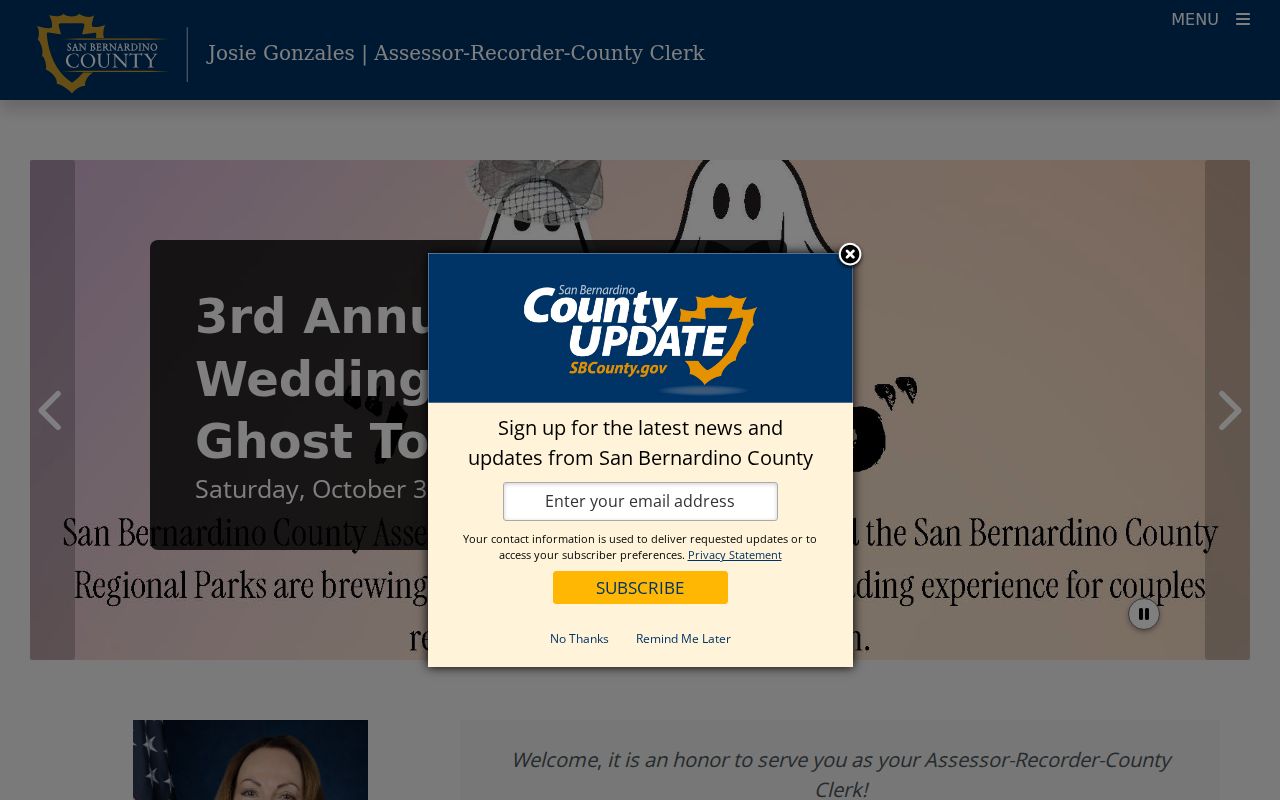
Use the linked county entry point to confirm current office routing, published coverage, and the difference between an index, a copy request, and an in-person inspection.
Limits on a San Bernardino Residents Directory
Public records are made for defined public functions. They do not create a lawful roster of every renter, child, roommate, visitor, or household member. California voter data is purpose-limited. DMV residence information is restricted. Safe at Home gives eligible participants a substitute address and confidential voter treatment, but it does not erase older lawfully distributed records. Recorded documents may also have special display restrictions.
California's privacy controls also include the Delete Request and Opt-out Platform, known as DROP, for requests to registered data brokers. An opt-out can affect a commercial compilation. It does not remove a deed, court file, assessment record, or other source held by a public custodian. Corrections belong with the office that created the record.
Official San Bernardino Rolls vs Commercial Data
Commercial directory services may combine public-record fragments with marketing, phone, or address data. They can be stale, merge people with similar names, and omit protected records. Official sources are narrower but easier to evaluate because the custodian, purpose, fields, and access limits are known. A responsible San Bernardino residents directory search treats a commercial result as an unverified lead at most.
| Question | Official source | Commercial category |
|---|---|---|
| Who is assessed to a parcel? | ARC Parcel Access and assessment record | May repeat or age the parcel name without showing source context |
| Who signed a recorded instrument? | ARC grantor-grantee index and ordered copy | May summarize a deed without the full image or legal description |
| Does a person hold a public license? | California board or license portal | May copy a status that later changes |
| Who lived at an old address? | California Room directory, census, newspaper, or obituary | May merge historical and current address data |
The official path can be slower, paid, or limited, but the limitation itself is part of the evidence. Keep the custodian's name and the record date beside every conclusion.
Build a San Bernardino Evidence Log
A good log prevents a plausible name from becoming a false identity. Write down the exact search term, spelling variant, source, URL, date checked, returned field, and reason the record fits. For an address, save the APN, situs, legal description, owner name, mailing distinction, document number, and party role. For a person, save the middle initial, date band, case role, business role, spouse or family link, and the second fact that separates this person from another.
- Source and custodian
- Name the ARC division, City Clerk, Superior Court, Registrar, library, archive, state board, or federal repository.
- Coverage and date
- Write the published range and the date of your search, especially where ARC publishes more than one historical access description.
- Returned field
- Keep the actual APN, document number, party role, case number, directory page, license number, or family fact.
- Independent check
- Use a second record that matches the same person, parcel, date, or relationship rather than relying on city name alone.
That habit makes a San Bernardino residents directory result useful without overstating what the record says. It also makes a gap visible: an absent name, a closed file, a disabled catalog, a missing directory year, or an unverified neighborhood source should remain labeled as a gap.
Note: The strongest conclusion names the source, date, record role, and independent fact that separates one person from another.